
Crowns and Porcelain Restorations
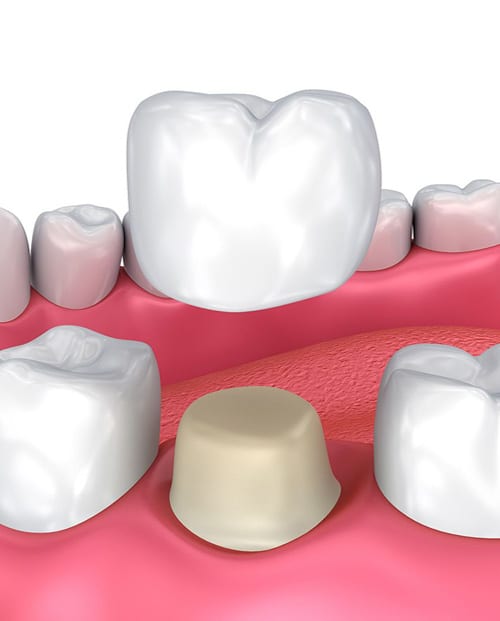
When a tooth has lost too much structure to stay strong or is experiencing pain from a crack, a Crown is your best friend. Crowns function like a shell over the top of your tooth, absorbing the pressure and stress from chewing so that the weakened tooth underneath does not fracture. Because they are made of very strong materials (like porcelain), not only do they look like a normal tooth, but they can absorb the pressure from chewing and biting for a long time without any issue. Crowns are great when a weak tooth needs a new lease on life.
Porcelain can also be used instead of normal filling material for smaller fillings, as it is stronger and lasts longer. The cost is a little higher but the cost is offset by not having to replace it as often, and therefore less damage to your tooth in the long term.
If you have a weakened tooth or a tooth which has had a root canal, there is a risk of it fracturing at any time, which can make fixing it harder – without a foundation to build upon, there is no support or stability. We hope you will contact us to discuss options for any teeth which have been weakened so we can help you choose the best option, and avoid issues in the future!
When Is a Dental Crown Recommended?
A crown covers and protects a tooth that is no longer strong enough on its own. We may recommend one if you have:
- A tooth with a large or failing filling
- A cracked tooth, or pain when you bite
- A tooth that has had root canal treatment
- Teeth that are badly worn from grinding
- A discoloured or misshapen tooth you’d like to improve
- A dental implant or bridge that needs a replacement tooth

The Dental Crown Process
Getting a crown at Tranquility Dentistry usually takes two appointments:
Appointment one: We numb the tooth, remove any decay or old filling and gently shape the tooth so the crown can fit over it. We then take a precise impression or digital scan and fit a temporary crown to protect the tooth.
Appointment two: Your custom crown is checked for fit, bite and colour, then permanently bonded in place.
Your new crown is shaded to match your natural teeth, so it blends seamlessly with your smile.
Crowns, Onlays and Fillings: What’s the Difference?
A filling repairs a small area of damage inside a tooth. When a large part of the tooth is missing, a filling may not be strong enough and the tooth is at risk of breaking.
A porcelain onlay covers and strengthens part of the tooth, keeping more of your natural tooth than a crown. A crown covers the whole visible tooth, acting like a protective shell that absorbs chewing forces.
Porcelain restorations cost a little more upfront than a filling, but because they’re stronger and last longer, they usually need replacing less often, which means less damage to your tooth over time. We’ll recommend the most conservative option that will protect your tooth for the long term.

The Cost of Dental Crowns in Ipswich
The cost of a crown depends on the material, which tooth is being treated and whether any extra work, such as a core build-up or root canal, is needed first. We’ll provide a written quote before we begin.
Health fund rebates vary depending on your fund and level of cover. We accept all health funds and process claims on the spot with HICAPS, and payment plans are available through Zippay, Afterpay and DentiCare (subject to approval).
With good care, regular check-ups and a night guard if you grind, a well-made crown can last 10–15 years or longer. We welcome patients from Yamanto, Ipswich, Raceview, Amberley, Ripley, Springfield and across the region.
Frequently Asked Questions
About Dental Crowns
What is a dental crown?
A dental crown is a custom-made cap that covers the entire visible part of a tooth. It restores the tooth’s shape and strength, protects it from cracking and looks like a natural tooth. At Tranquility Dentistry in Yamanto, we provide durable, natural-looking porcelain crowns for patients across Ipswich.
When do I need a crown?
A crown is often recommended when:
- A tooth has a large filling and not enough natural structure left
- A tooth is cracked or causing pain when biting
- A tooth has had root canal treatment
- A tooth is badly worn from grinding
- A tooth is discoloured or misshapen and you want to improve its appearance
What are crowns made from?
We use very strong, tooth-coloured materials such as porcelain and ceramic. These materials look like natural teeth and can handle the pressure of chewing and biting for many years. We will recommend the best material for your tooth based on its position and your bite.
How long does a dental crown last?
With good oral hygiene and regular check-ups, a well-made crown commonly lasts 10–15 years or longer. Avoiding habits such as chewing ice or opening packets with your teeth, and wearing a night guard if you grind, will help your crown last as long as possible.
How many appointments does a crown take?
A crown usually takes two appointments. At the first visit we prepare the tooth, take a precise impression or scan and fit a temporary crown. Your permanent crown is then custom-made, and at the second visit we check the fit, bite and colour before cementing it in place.
Does getting a crown hurt?
No. The tooth is fully numbed with local anaesthetic before we begin, so you should feel little more than some pressure. The tooth and gum may feel slightly tender for a few days afterwards. If you feel nervous, we also offer nitrous oxide (happy gas) at our Yamanto clinic.
What is the difference between a crown and a filling?
A filling repairs a smaller area of damage inside the tooth, while a crown covers the whole tooth. When too much tooth structure is missing, a filling alone may not be strong enough and the tooth could fracture, so a crown gives much better long-term protection.
Do I need a crown after a root canal?
Back teeth that have had root canal treatment usually need a crown, as they become more brittle and are at risk of splitting. A crown gives the tooth a stable foundation and helps protect your investment in saving it.
What are porcelain inlays and onlays?
Inlays and onlays are porcelain restorations that repair part of a tooth rather than covering all of it. They are stronger and longer lasting than standard fillings and preserve more natural tooth than a full crown. The cost is a little higher than a filling, but they usually need replacing less often.
How much does a dental crown cost in Ipswich?
The cost depends on the material, the tooth involved and whether any preparation work (such as a core build-up or root canal) is needed. We provide a clear written quote before starting. Health fund rebates vary depending on your fund and level of cover, and we process claims on the spot with HICAPS.
Can I pay off my crown?
Yes. We offer payment plans through Zippay, Afterpay and DentiCare (subject to approval before your appointment), making it easier to protect a weakened tooth now rather than waiting until it breaks.
Will my crown look natural?
Yes. Porcelain crowns are colour-matched to your surrounding teeth and shaped to blend in with your smile. Most people will not be able to tell which tooth has been crowned.
Can a crown fix a cracked tooth?
In many cases, yes. A crown holds the tooth together and spreads biting forces evenly, which can relieve the sharp pain of a cracked tooth and stop the crack spreading. If the crack extends below the gum or into the root, other options may be needed. Early treatment gives the best chance of saving the tooth.
How do I look after my crown?
Care for your crown like a natural tooth: brush twice a day, floss daily around it and visit us every six months for a check-up and clean. The tooth underneath can still decay at the edges, so good hygiene is important.
What if my crown feels loose or falls out?
Call us as soon as possible on (07) 3060 4724. Keep the crown safe and bring it with you, as it may be possible to re-cement it. Avoid chewing on that side in the meantime.
Can crowns be whitened?
No. Porcelain does not respond to whitening products. If you are planning teeth whitening, it is best to whiten first so we can match your new crown to your brighter shade.
Are crowns used for cosmetic reasons?
Sometimes. Crowns can improve teeth that are badly discoloured, misshapen or heavily restored. For mainly cosmetic changes to front teeth, veneers may be a more conservative option. We will discuss the choices with you.
Are crowns used to replace missing teeth?
Yes. Crowns can be placed on top of dental implants, or joined together as a dental bridge to replace a missing tooth using the neighbouring teeth for support.
Where can I get a dental crown near me?
Tranquility Dentistry is conveniently located at Shop 7, 428 Warwick Road, Yamanto. We welcome patients from Ipswich, Raceview, Flinders View, Amberley, Willowbank, Walloon, Deebing Heights, Ripley, Springfield, Redbank and Brassall, as well as the Scenic Rim and Lockyer Valley.
How do I book an appointment for a crown?
Call (07) 3060 4724, email info@tranquilitydentistry.com.au or book online. We will examine the tooth, take any x-rays needed and discuss your options and costs before any treatment begins.