


High-Quality Dentures
When dentures are mentioned, most people would think of their elderly relatives pulling out a full set of false teeth, but there are many other kinds of dentures that are available. They all work to achieve the same result – to replace missing teeth, using existing teeth or gums as support, and can be removed for easy cleaning.
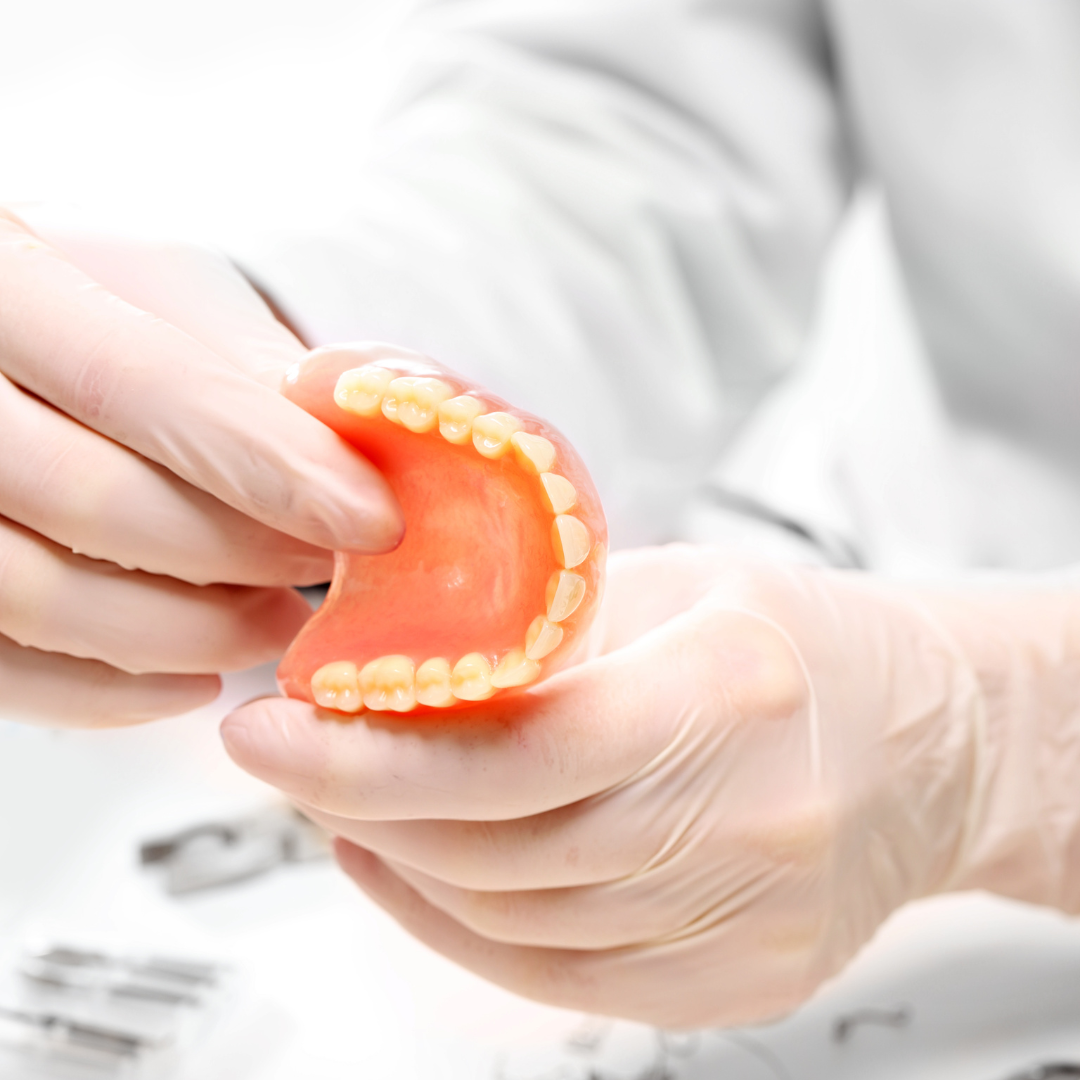
Full dentures replace all the teeth of a jaw (upper and lower dentures are available) and can be made to look very natural. In most cases they can be made to fit very well, but never fully replace the feel or function of your original teeth. Full dentures are a great option if and only if your teeth aren’t strong enough to last or cannot support a partial denture, as they will allow you to eat and smile, but just not quite as well as actual teeth.
A partial denture replaces some teeth in your jaw, and can be as little as 1 tooth to as many as 10, depending on the strength of the remaining teeth to hold the denture in place. They can be made of flexible material which clips into place without any metal attachments, which is ideal for replacing one tooth and isn’t too large to interfere with your tongue movement or taste. Metal frame dentures are available which are very thin but incredibly strong, and form-fitting to your teeth so they fit excellently. These are ideal for replacing multiple teeth, and have a long lifespan, feel very comfortable once you get used to them, and can usually be designed to avoid seeing the metal when you smile. A cheaper option are pink acrylic dentures which use small wires to hold in place, which are good options in some cases where replacement teeth are needed for chewing food, but budget isn’t high or the remaining teeth aren’t strong enough to hold them long term.
The best tooth is a real tooth, but if they are lost we have a lot of great options to suit your budget and your smile.
Types of Dentures at Tranquility Dentistry
We offer a range of dentures to suit your needs, comfort and budget:
Full dentures
Replace all the teeth in the upper or lower jaw.
Metal-frame (chrome) partial dentures
Thin, strong and form-fitting, ideal for replacing several teeth.
Flexible partial dentures
Clip in without metal clasps, ideal for one or two teeth.
Acrylic partial dentures
A more budget-friendly option held in place with small wires.
Immediate dentures
Made before extractions and fitted the same day, so you’re never without teeth.
Implant-retained dentures
Clip onto implants for extra stability when eating and speaking.
The Denture Process
New dentures are made over several appointments at our Yamanto clinic, so we can get the fit and look just right:
- Consultation: we examine your mouth and remaining teeth and discuss the options
- Impressions: accurate moulds of your mouth are taken
- Bite and tooth selection: we record your bite and choose the shape and shade of your new teeth
- Try-in: you see and try a wax version before your dentures are finished
- Fitting and review: we fit your dentures and make any adjustments needed
Living With Your New Dentures
Most people adjust to new dentures within a few weeks. At first they can feel bulky, and you may notice extra saliva or small changes to your speech. Start with soft foods cut into small pieces, chew on both sides and practise reading aloud. If you get sore spots, let us know and we’ll adjust your denture.
Clean your dentures daily with a soft brush and denture cleaner, and take them out at night to give your gums a rest. Over time your gums and jaw change shape, so dentures may need relining or replacing to stay comfortable. If your dentures feel loose, crack or break, call us on (07) 3060 4724. Many repairs can be done quickly.

The Cost of Dentures in Ipswich
The cost of dentures depends on the type of denture and how many teeth are being replaced. Acrylic dentures are the most affordable, while metal-frame and flexible dentures cost more but tend to be more comfortable and longer lasting.
Health fund rebates vary depending on your fund and level of cover. We accept all health funds and claim on the spot with HICAPS, and payment plans are available through Zippay, Afterpay and DentiCare (subject to approval).
Our clinic is fully wheelchair accessible with easy parking, and we welcome patients from Yamanto, Ipswich, Raceview, Flinders View, Amberley, Willowbank, Ripley, Springfield, Brassall and beyond.
Frequently Asked Questions
About Dentures
What types of dentures do you offer?
At Tranquility Dentistry we offer:
- Full dentures to replace all teeth in the upper or lower jaw
- Metal-frame (chrome) partial dentures, which are thin, strong and fit very well
- Flexible partial dentures with no metal clasps, ideal for one or two teeth
- Acrylic partial dentures, a more budget-friendly option
- Implant-retained dentures for extra stability
What is the difference between full and partial dentures?
Full dentures replace all the teeth in a jaw and rest on the gums. Partial dentures replace some teeth, from as few as one to as many as ten, and use your remaining natural teeth for support. Partials help stop your other teeth from drifting.
How long does it take to make dentures?
New dentures usually take several appointments over a few weeks, including impressions, bite records, a try-in to check the look and fit, and the final fitting. We will give you a timeline at your first visit to our Yamanto clinic.
How long do dentures last?
Dentures typically last five to ten years, depending on the type and how well they are cared for. Your gums and jawbone change shape over time, so dentures may need relining or replacing to keep a comfortable fit.
Will dentures look natural?
Yes. Modern dentures can be made to look very natural. We choose the shape, size and shade of the teeth to suit your face and smile, and you will see a trial set before your dentures are finished.
How long does it take to get used to new dentures?
Most people adjust within a few weeks. At first, dentures can feel bulky and you may notice extra saliva or slight changes to speech. Start with soft foods cut into small pieces and practise speaking aloud. We will make adjustments if you have any sore spots.
Can I eat normally with dentures?
With practice, most people eat a wide range of foods. Dentures never fully replace the function of natural teeth, so very hard or sticky foods can be difficult. Implant-retained dentures can make chewing much easier.
How do I clean my dentures?
- Remove and rinse dentures after eating
- Brush them daily with a soft brush and denture cleaner (not regular toothpaste, which can scratch)
- Soak them overnight in water or a denture solution
- Brush your gums, tongue and any natural teeth
- Handle over a folded towel or basin of water in case you drop them
Should I sleep with my dentures in?
We generally recommend removing your dentures at night to give your gums a rest and reduce the risk of infections such as denture stomatitis. We will give you personalised advice at your fitting.
My dentures are loose. What can I do?
Loose dentures are common as the gums and bone change shape. A reline can refit your existing denture, or a new denture may be needed. Implants can also be used to anchor dentures firmly. Book a check at our Yamanto clinic rather than relying on adhesives long term.
Do you repair dentures?
Yes. If your denture is cracked, broken or has lost a tooth, contact us on (07) 3060 4724. Many repairs can be completed quickly. Please do not try to glue a denture at home, as this can make a professional repair harder.
Can I get dentures straight after my teeth are removed?
Yes. An immediate denture can be made before your extractions and fitted on the same day, so you are never without teeth. As your gums heal and shrink over the following months, the denture will need relining or replacing.
Are dentures or implants better?
Dentures are more affordable and non-surgical, while implants are fixed and feel more like natural teeth. Many people combine the two with implant-retained dentures. We will explain the pros and cons of each for your situation.
How much do dentures cost in Ipswich?
The cost depends on the type of denture and how many teeth are being replaced. Acrylic dentures are the most affordable, while metal-frame and flexible dentures cost more but tend to be more comfortable and longer lasting. We will provide a written quote after your consultation.
Does health insurance cover dentures?
Health fund rebates vary depending on your fund and level of cover. We accept all health funds and can claim on the spot with HICAPS. Payment plans through Zippay, Afterpay and DentiCare are also available (subject to approval).
Are there options for replacing just one tooth with a denture?
Yes. A small flexible denture clips into place without metal clasps and is ideal for replacing a single tooth. It is comfortable and not too bulky, so it does not interfere with your tongue or taste. A bridge or implant may also be an option.
Will a partial denture damage my other teeth?
A well-designed partial denture is made to protect your remaining teeth by spreading the load. It is important to clean your natural teeth and the denture carefully each day and attend regular check-ups so we can monitor the supporting teeth.
Why do my gums hurt with my dentures?
Sore spots are common with new dentures and can usually be relieved with a quick adjustment. Ongoing soreness in older dentures may mean the fit has changed. Call us so we can check the denture and your gums.
Where can I get dentures near Ipswich?
Tranquility Dentistry is located at Shop 7, 428 Warwick Road, Yamanto, with easy parking and wheelchair access. We see patients from Ipswich, Raceview, Flinders View, Deebing Heights, Ripley, Amberley, Willowbank, Walloon, Springfield, Redbank, Brassall and Karalee.
How do I book a denture consultation?
Call (07) 3060 4724, email info@tranquilitydentistry.com.au or book online. We will check your mouth and remaining teeth and recommend the options that best suit your budget and your smile.